
Understanding the Jiu-Jitsu Belt Progression System in McKinney
Starting a martial arts journey brings exciting challenges and rewarding milestones. Many new students wonder how rankings work on the mats. The belt system provides a clear roadmap for personal development. Furthermore, this structured path keeps practitioners motivated through every stage of growth. Each belt color represents specific technical knowledge, mat time, and mental maturity. At Gracie Barra McKinney, we follow a proven curriculum that guides students from their first class to advanced ranks. Understanding this progression helps you set realistic goals and celebrate your achievements along the way.
Brazilian jiu-jitsu in Mckinney
The Purpose of the Belt System in Martial Arts
A martial arts ranking system serves as a measure of technical efficiency and character. It creates a structured environment where students understand their current capabilities. Consequently, practitioners can measure their progress over months and years of practice.
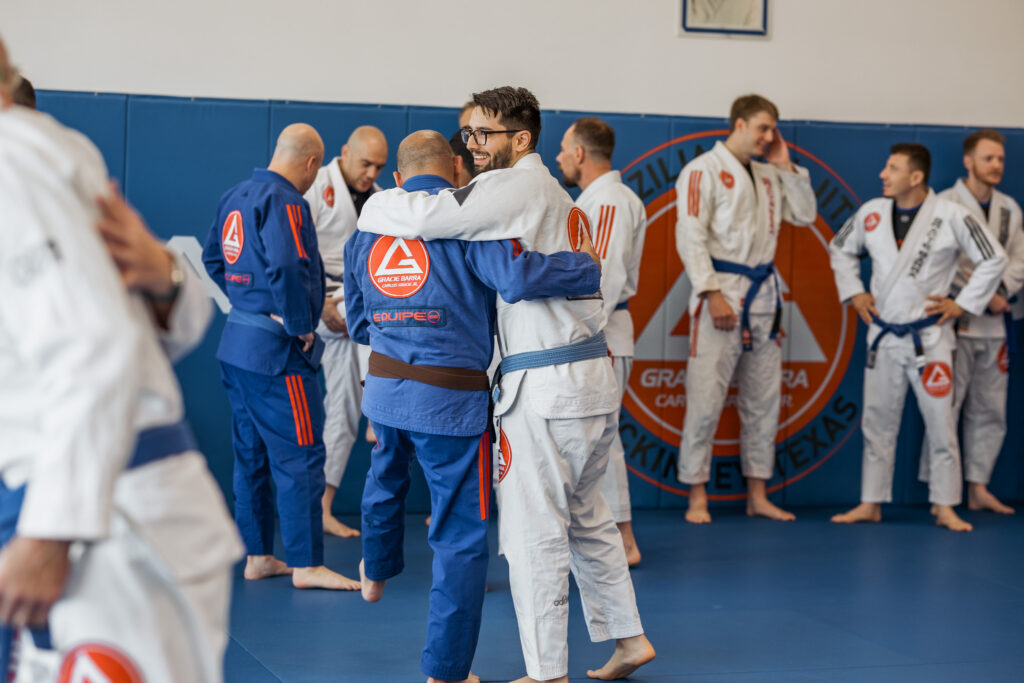
The belt system also establishes clear standards of safety. Higher belts learn to control their weight and momentum during sparring. Therefore, they protect newer training partners while testing advanced techniques. This hierarchy fosters deep mutual respect inside the academy. Lower belts look up to experienced students for guidance. Meanwhile, senior practitioners develop leadership skills by helping others.
Furthermore, the ranking process teaches valuable life lessons about patience and perseverance. You cannot buy a promotion or shortcut the journey. You must earn every stripe and belt through dedicated effort on the mats. This gradual progression builds a strong work ethic that translates into daily life.
The Adult Ranking Progression Step by Step
Adult practitioners follow a progressive belt order that reflects their growing technical capability. Each stage emphasizes different aspects of grappling, strategy, and self-defense.
White Belt: Building the Foundation
The white belt marks the beginning of your martial arts journey. Every practitioner starts here regardless of their background or athletic ability. This phase symbolizes an open mind and a willingness to learn.
During this initial stage, students focus on survival and basic body mechanics. You learn how to break fall safely to protect your joints. Additionally, you master essential defensive postures and hip movements. White belts focus heavily on escaping bad positions rather than forcing attacks.
Our structured program helps beginners adapt to the physical demands of training safely. Highly trained instructors demonstrate fundamental techniques with clear, step-by-step instructions. Consequently, white belts build confidence as they absorb foundational knowledge. Most practitioners spend one to two years building this necessary framework before advancing.
Blue Belt: Developing Personal Strategy
Earning a blue belt represents a major milestone in a student’s life. The International Brazilian Jiu Jitsu Federation requires practitioners to reach at least 16 years of age for this rank. At this level, you transition from basic survival to active technical execution.
Blue belts possess a solid grasp of essential sweeps, guards, and submissions. You begin to connect individual movements into fluid combinations. Furthermore, you start developing a personal game plan that suits your body type and preferences.
However, many practitioners experience technical plateaus during this phase. Higher belts challenge your defense, while white belts test your offense. Therefore, persistence remains essential for success. Blue belts usually spend two to three years refining their techniques before reaching the next level.
Purple Belt: Refining Technical Precision
The purple belt is widely recognized as the technical heart of grappling. By this stage, you have invested thousands of hours on the mats. You no longer rely on momentum or brute force to execute moves. Instead, you rely on leverage, timing, and smooth transitions.
Purple belts demonstrate deep technical knowledge across all major positions. You can adjust your game instantly to counter an opponent’s movement. Consequently, many practitioners view the purple belt as a highly creative phase of development.
In addition, purple belts begin assisting newer students during practice. Explaining details to beginners sharpens your own technical understanding. This teaching experience prepares you for future leadership roles within the academy.
Brown Belt: Mastering Microscopic Details
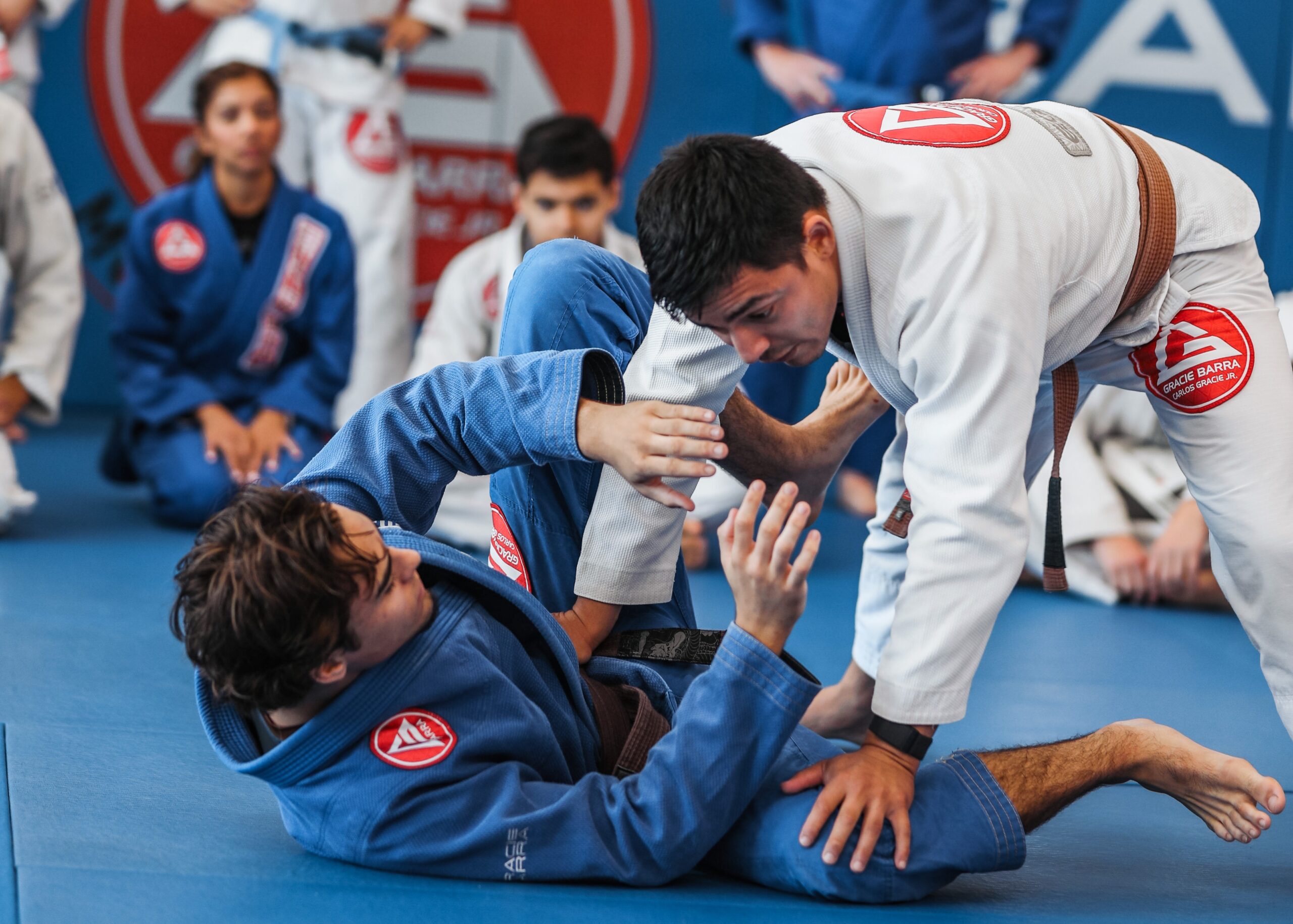
The brown belt marks the final stage before reaching the black belt rank. This phase centers on deep refinement and psychological composure. Brown belts possess a vast library of technical solutions for every scenario.
Rather than learning entirely new movements, you focus on microscopic adjustments. You refine your weight distribution, pressure, and grip control. Furthermore, brown belts master subtle concepts that beginners often overlook. You learn how to conserve energy while applying constant control over an opponent.
Brown belts display calm precision during intense sparring rounds. They understand how to neutralize attacks with minimal physical effort. Usually, a practitioner spends at least one year at brown belt before final promotion.
Black Belt: Achieving Leadership and Mastery
Earning a black belt represents years of unwavering dedication and discipline. It signifies complete mastery of fundamental and advanced grappling concepts. However, experienced practitioners consider the black belt as the beginning of a deeper journey.
A black belt practitioner possesses exceptional adaptability on the mats. You can analyze complex tactical problems instantly and find efficient solutions. Furthermore, black belts exemplify the values of respect, integrity, and humility.
Even after achieving a black belt, learning continues indefinitely. Practitioners earn additional degrees over time as they contribute to the community and pass on their knowledge.
The Youth Belt Ranking Structure
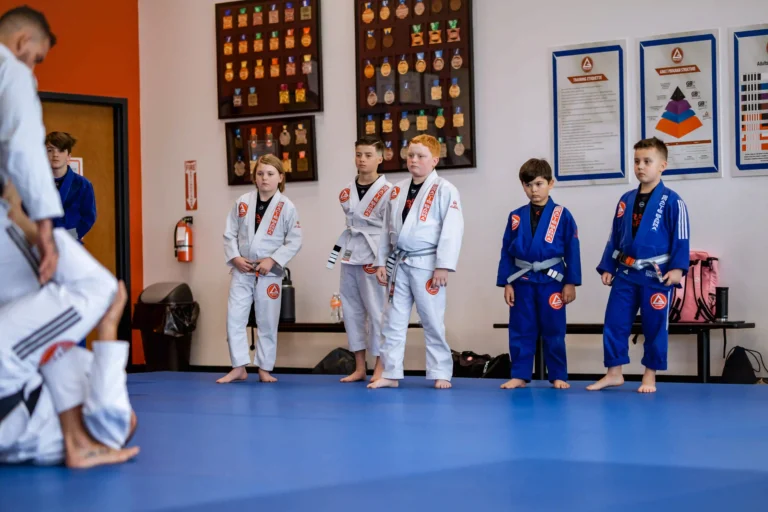
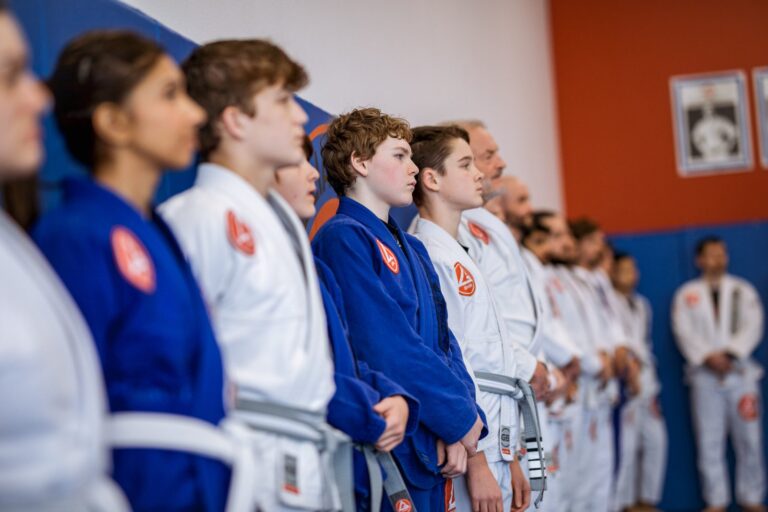
Children follow a specialized ranking structure designed for their developmental needs. Youth belts encourage consistent participation through frequent, achievable milestones.
Young practitioners begin at white belt before moving through grey, yellow, orange, and green belts. Each youth belt color includes three distinct sub-categories:
White Stripe
Solid Color
Black Stripe
This detailed structure allows our team to celebrate small achievements regularly. Younger students learn the direct link between effort and reward. Consequently, children build strong self-esteem while learning discipline and self-defense.
When young practitioners turn 16, they transition into the adult belt system. Their youth experience provides a powerful head start for adult ranks.
How Stripes Measure Short-Term Growth
Belts represent major long-term achievements that take years to accomplish. However, students need shorter milestones to track ongoing progress. Stripes serve as visual indicators of growth between belt promotions.
Instructors place white cloth stripes on the black bar of a student’s belt. Most ranks feature up to four stripes before promotion to the next color.
Stripes recognize several key areas of development:
Consistent attendance at scheduled classes
Technical understanding during drilling sessions
Positive attitude and respectful mat behavior
Ability to perform techniques during live sparring
Receiving a stripe reinforces good training habits. It reminds students that steady effort creates steady progress over time.
Key Factors for Advancing to the Next Level
Promotion decisions depend on a holistic assessment of every student. Our highly trained professors look beyond raw athleticism when evaluating readiness.
Consistency on the Mats
Consistency is the single most important factor in ranking progression. Showing up regularly builds muscle memory and physical endurance. Consequently, students who train consistently absorb technical details faster.
Technical Understanding and Application
Progress requires genuine comprehension of principles. You must demonstrate proper leverage, distance management, and timing. Furthermore, you must apply techniques effectively without relying on excessive strength.
Attitude and Respect for Teammates
Character matters just as much as technical skill. Practitioners must show respect to instructors, training partners, and academy rules. Supporting your teammates and maintaining a humble attitude are essential requirements for advancement.
Starting Your Ranking Journey at Gracie Barra McKinney
Embarking on a martial arts journey transforms your physical health and mental strength. Every black belt once started as a brand new white belt.
At Gracie Barra McKinney, we offer a clean, supportive environment for students of all ages. Our well-trained instructors guide you through every stage of the belt system with patience.
Brazilian jiu-jitsu in Mckinney
Are you ready to take your first step on the mats? Visit our official website today to view our current class schedule. Register for a free trial session and begin your ranking journey with our supportive community!